Houdini courses at fxphd
NUMBER OF COURSES: 43TOTAL DURATION: 235 HOURS 55 MINUTES
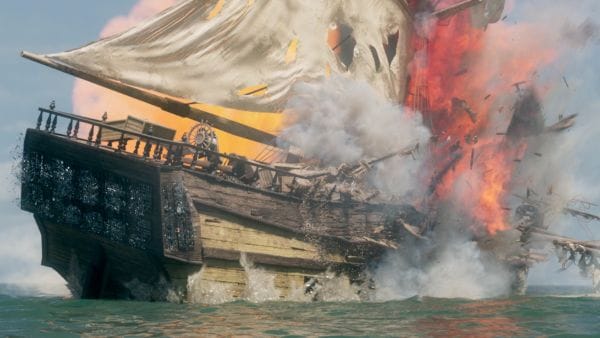
Pirate Ship Destruction Workshop Part 2: Lighting, Rendering & Compositing
Pirate Ship Destruction Workshop Part 2: Lighting, Rendering & Compositing completes the final stage of a large-scale cinematic destruction sequence, taking artists from finished simulations through to a polished final shot. Designed as a continuation of Part 1, this workshop focuses on the production workflows for lighting, rendering, and compositing complex FX-driven sequences. Artists looking to strengthen their shot-finishing skills will gain practical experience assembling multiple simulation elements into a cohesive, cinematic result.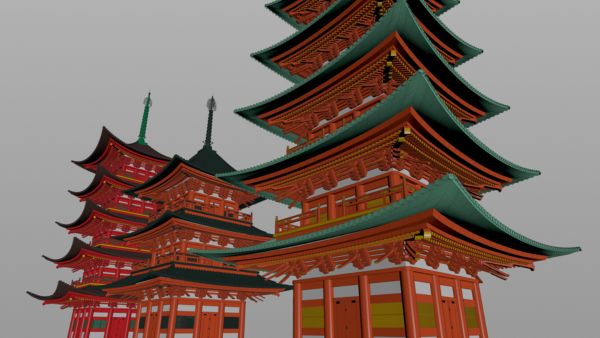
Procedural Modeling For Buildings in Houdini
Master the art of procedural modeling in Houdini with this course, where you'll create a Japanese-inspired architectural project. From building the structure and creating intricate roof tiles to designing decorative walls and balconies, you’ll learn essential techniques in VEX, ray marching algorithms, and parametric modeling. Each lesson is packed with practical workflows and problem-solving strategies to help you create complex, adaptable designs.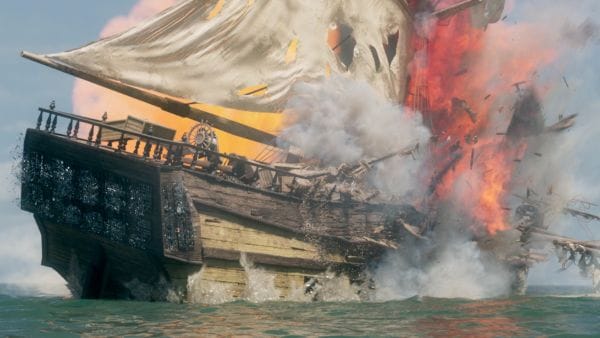
Pirate Ship Destruction Workshop Part 1: FX Simulation
This course focuses on building a cinematic pirate ship destruction sequence by combining multiple FX disciplines: Rigid Body Dynamics (RBD), complex Pyro simulations, soft body effects (cloth and ropes), and large-scale water interaction. We will use native Pyro tools for all explosion and smoke elements, MPM and RBD tools for destruction, Vellum for soft bodies, and the FLIP solver for all water effects.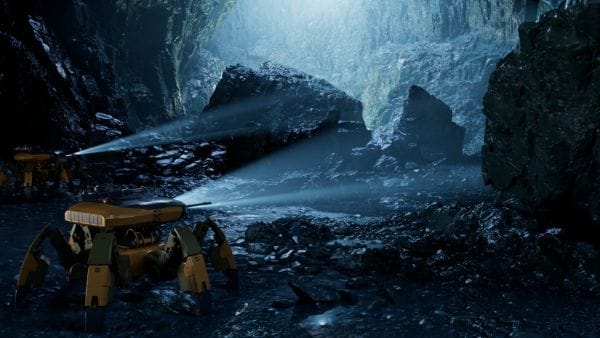
VFX Cave Environment - Part 1
Creating photorealistic CG environments is a key component of modern feature film VFX, used to build worlds such as those seen in Dune, Star Wars, and Avatar. In this course, members will learn techniques to create a high-detail cinema environment using real-world reference locations to reproduce a highly detailed digital environment for a film VFX shot. The creation will include the typical work of a feature film Environment Generalist artist, such as layout, modeling, publishing or importing assets, texturing and surfacing, lighting and atmospheric effects, and rendering AOVs for comp teams. All this will be covered to create a realistic cave scene based on the world's largest cave.
Lavaman Part 2 - Lighting & Compositing
In part two of this workshop, we will dive into the lighting, look development, and compositing aspect of the shot started in the HOU242 course. Using Solaris and Karma XPU, we explore lighting, shader creation, and setting up passes and AOVs.like setting up heat distortion AOV on our pyro elements.
Lavaman Part 1 - Simulation in Houdini
Simulate a humanoid figure emerging from molten lava using Houdini’s MPM, Flip, and Axiom solvers. In part one of this two-part course, Ganesh Lakshmigandan guides you through building interconnected lava elements, dynamic surface interactions, and atmospheric effects, while sharing essential techniques for delivering stable, high-quality FX shots across long frame ranges.
Lighting in Houdini - Saved by the Whale, Part 2
In part two of this workshop, Ganesh Lakshmigandan dives into the lighting, look development, and compositing processes for the shot started in the HOU238 course. Using Solaris and Karma XPU, we explore advanced techniques in lighting, shader creation, and setting up passes and AOVs. Finally, wemove into Nuke to complete the final composite, ensuring a seamless and polished shot.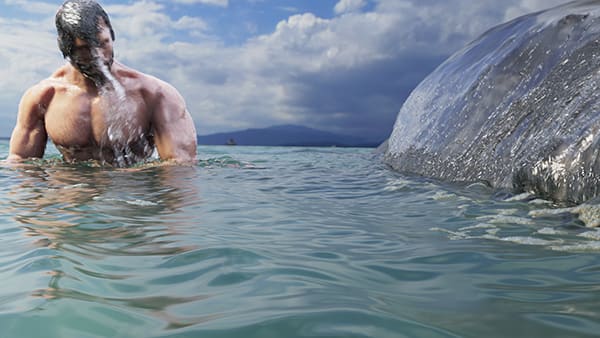
Simulation in Houdini - Saved by the Whale, Part 1
Part one of this production-centric workshop focuses on creating the simulation aspect of a medium close-up water scene featuring a character and a whale emerging from the water. Taught by Ganesh Lakshmigandan, he shares production-proven techniques gleaned from working on high-end projects such as Avatar 2, upon which the scene for this course was inspired by.
Houdini Vellum Workflow on The Battle for Bazoches
This course, from professor and VFX artist Liam Whitehouse, covers how to setup vellum ropes, cloth, rbd, softbodies, and fur for our medieval castle siege shot from the VFX308: Battle for Bazoches course.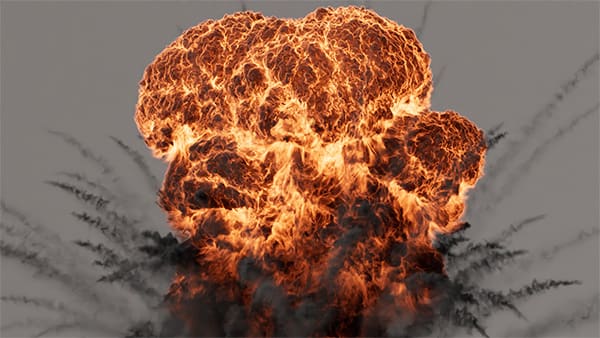
Pyrotechnic Explosions in Houdini
This course, from professor and VFX artist Liam Whitehouse, covers how to create detailed pyrotechnic explosions using Houdini, Axiom and Karma XPU.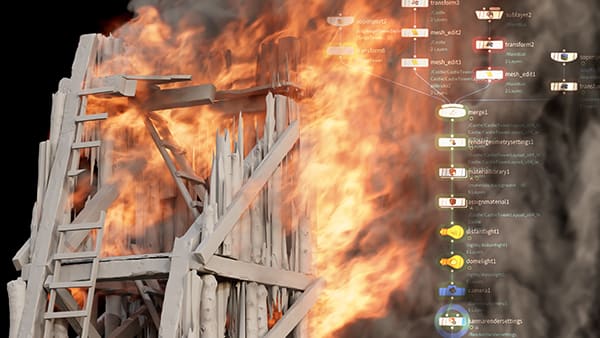
Rendering Fire and Smoke Simulations in Houdini
This course, from VFX artist Liam Whitehouse, covers how to render detailed fire and smoke simulations which have been generated using Axiom for Houdini.
Creating Fire and Smoke Simulations in Houdini and Axiom
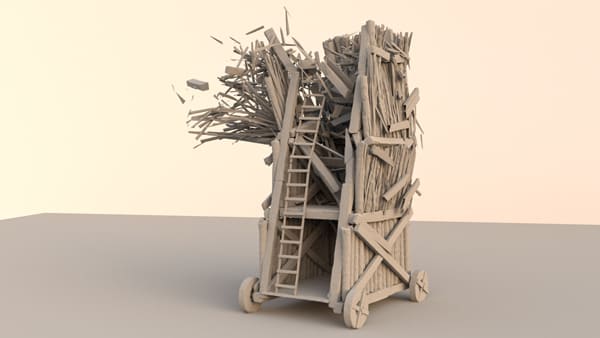
This course, taught by Liam Whitehouse, covers how to create detailed fire and smoke pyro simulation effects for a destroyed wooden siege tower, for a warfare scene set in medieval Europe.
Crowds in Houdini
This course, taught by VFX supervisor Charles Chorein, provides a comprehensive guide to creating and animating a crowd scene using motion capture data and various assets from our VFX308 course. Starting with the acquisition of models and motion capture from the Mixamo database, you will create and enhance assets in Maya, then import and set up these assets in Houdini. The course covers the application of motion capture data, adding props like swords and shields, and managing all elements within a single agent.You will learn to incorporate the terrain, perform rigging adjustments, and populate your scene with varied agents. The course also delves into simulating agent collisions and interactions using DOPnet and introduces techniques to add variation in animations based on different triggers, ensuring a dynamic and realistic crowd scene.
Charles Chorein is a CG supervisor in London with 15 years of experience. He has been working in London since 2009 and has achieved various movies such as The Hobbit, Prometheus, The Hunger Games 2, Superman: Man of Steel, Harry Potter 7, Pirates of the Caribbean 4 and DespicableMe. He has more recently been working on TV shows and recently finished Dark Crystal for Netflix.
Rigid Body Destruction Dynamics in Houdini
This course from Liam Whitehouse covers how to create art-directed destruction effects for a photoreal VFX sequence. Using SideFX Houdini, members will learn the techniques needed to create highly detailed destruction impact effects, using a siege warfare scene set in medieval Europe.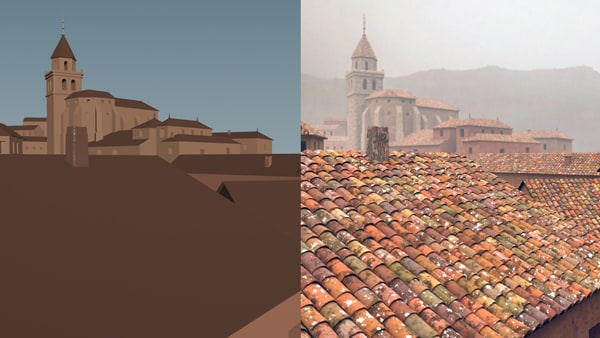
Taking Houdini Digital Assets to the Next Level
Digital Assets are at the center of everyday use of Houdini. You have probably created HDAs and also downloaded some created by others. The goal of this course is to analyze what makes a good HDA and how you can apply these concepts to create more robust Digital Assets. As a follow up to HOU140 - Houdini FX Tool Building Foundation, this intermediate course assumes some basic knowledge.
USD in Houdini 19.5
This course is a follow-up to HOU221: USD and LOPs for Houdini Artists which was released using Houdini 18.5. One year later, Houdini 19.5 was released and with it, a lot of changes have been introduced in Solaris and Karma. This course will cover some of the new workflows that were introduced as well as changes in previous workflows that were modified since the last course was released.
USD and LOPs for Houdini Artists
More and more applications are starting to support USD and most studios are in some way using it in their pipelines. USD is here to stay and it is slowly becoming the industry standard. This course is meant for artists who want to get familiar with how USD works to better understand the pipelines that they are working in. It will cover all the basics you need to know about USD in general, and then it will focus more on Houdini and its new LOP context introduced in version 18.0 which allows artists to procedurally edit and create USD files.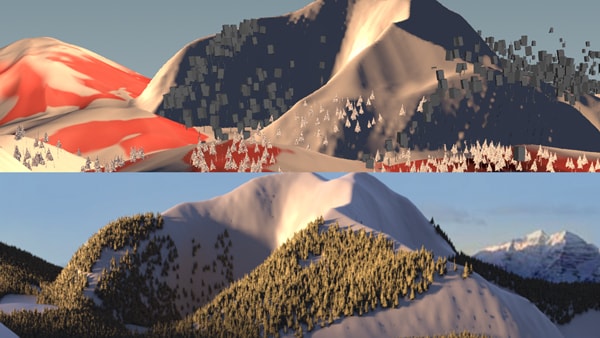
Height Fields in Houdini, Part 2
Part two of the course focuses on shading, lighting, rendering, and other technical aspects of Mantra aspect to enable us to render this shot. It includes an exploration of NVIDIA OptiX technology in Mantra for denoising renders, as well as the use of LPEs,and utility AOVs to help in creating the composite in Nuke.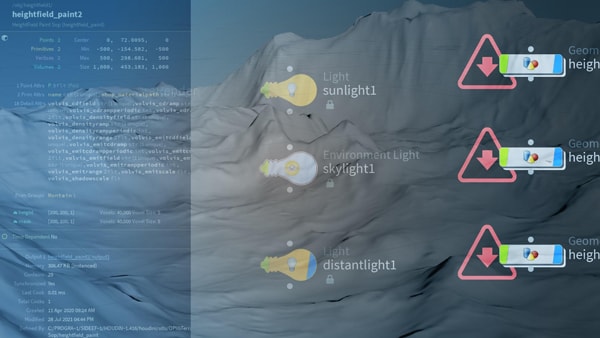
Height Fields in Houdini, Part 1
This course is the first of a two part course covering terrain generation in Houdini using height fields. If you are a concept artist, a digital matte painter, or environment artist this course is for you.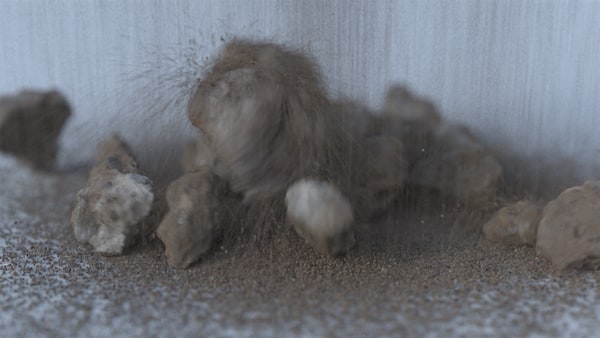
Rendering Foundations for Houdini and Karma
This course provides a comprehensive introduction to rendering in Houdini, with a focus on FX simulations, such as rigid bodies, particles and volumes. It assumes a basic familiarity with FX simulation and with the Houdini UI. There is a focus throughout the course on a balance of speed and quality which will help ensure your success in the industry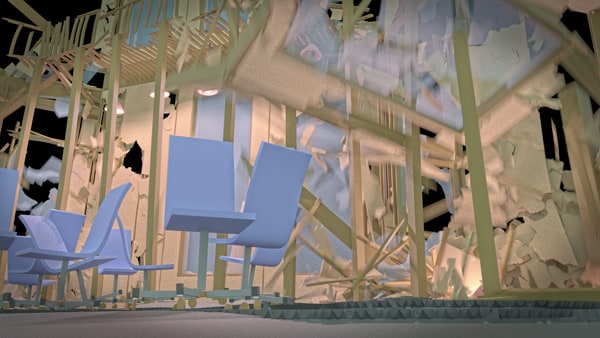
Realistic Destruction Workflows
This course will guide you through the latest destruction processes and workflows using Houdini and Bullet. Technical methods as well as eye development come together in the course and you'll be guided through the complete destruction process, producing a realistic final result.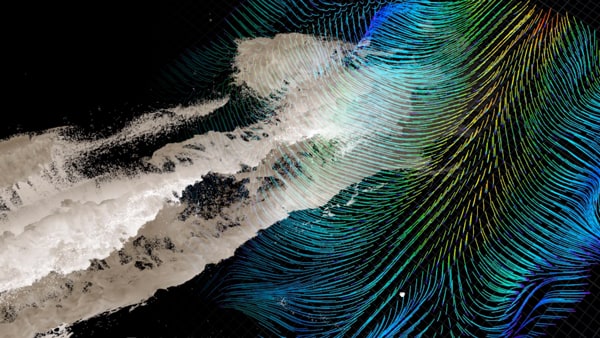
Houdini Fundamentals, Collection 3
In this course, part of our Houdini Fundamentals series, you will learn the concepts of creating step by step production-ready flip workflows.
Impact Based Fluid Effects in Houdini
This course is an in-depth look at creating an open ocean simulation in Houdini, rendered with Redshift and basic compositing in Nuke.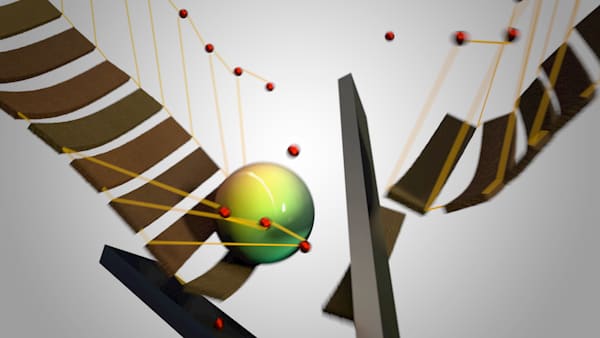
Houdini Fundamentals, Collection 2
This course, taught by Andrew Lowell, introduces rigid body dynamics in Houdini. Houdini's entry into realistic physics started with rigid body dynamics, and it has remained one of the most aggressive growth areas both in the software as well as VFX as a whole. This quick start will introduce foundations in those concepts to get up and running quickly, whether embarking on learning or transferring knowledge from other packages.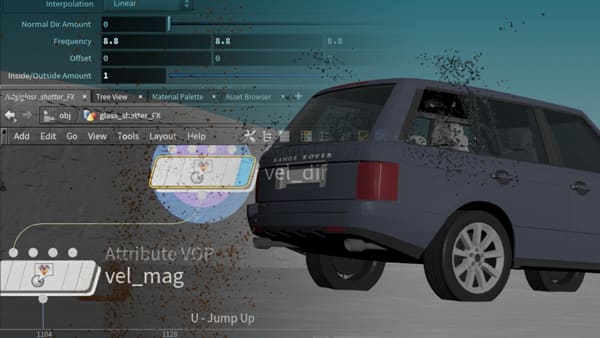
Impact-Based Particle Setups in Houdini
This course covers how to sculpt and perfect an extremely common aspect of most FX shot work: the creation of secondary particles and the technical and creative processes behind it. Appropriate size distributions, shaping, motion, orientations, and more will be covered during the course.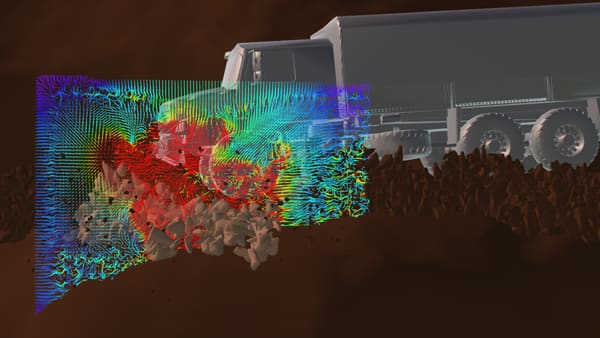
Impact-Based Dust Volumetrics in Houdini
Getting volumetric clouds of dust and particulates moving and rendering correctly can often prove a challenging task for juniors and seniors alike. This course focuses on generating great looking volumetric dust based on impacts and preparing you to be able to adapt these types of simulations to art direction.
Houdini Fundamentals, Collection 1
This series of short lessons is designed to get a new Houdini user up and running with a set of core fundamentals. Although the examples are basic enough for new users to follow along, they touch on concepts which will carry all the way through to advanced setups by learning how to direct the flow of geometry data, and important concepts in noise, vectors and rotations, population, and simulation.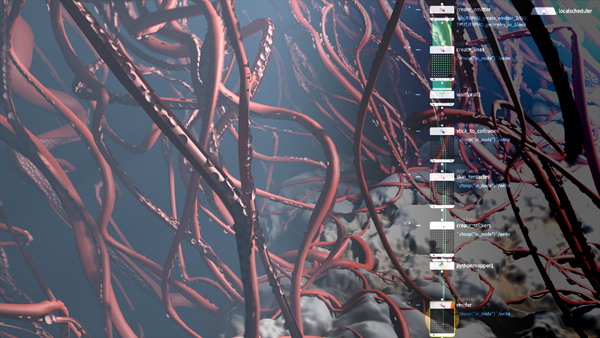
Houdini FX Tool Building Foundation
This introductory level offering aims to get you started with a solid base of the foundations of tool building, showing how to create a complex Houdini file so that it can be run in dozens or even hundreds of shots with minimal effort in a pipeline. The course is primarily focused on a Houdini concept called OTLs, which is a way to build our own nodes out of other nodes.
Houdini FX, Particle Fundamentals and Fuzzy Logic
Particle motion, simulation, behaviour, and theory are at the core of the FX artist skillset. This course will challenge you with various particle and motion exercises and the construction of a non-human crowd.
Advanced VEX & Python for Houdini TDs
This course, taught by Jeronimo Maggi, builds on the fundamentals taught in Introduction to Houdini VEX & Python (HOU217), focusing on creating a tool using mostly Python and some VEX. We start from scratch and slowly add one feature on top of the other as the needs come along, ending up learning how to debug and test our code.
Introduction to Houdini VEX and Python
This course covers the basics of VEX, Houdini's expression language, as well as how to use Houdini's Python API. We will look at the strengths and weaknesses and when you should favour one or the other. VEX is an essential tool for any technical director, so we will cover all the basics starting from its syntax, the difference between VEX and VEXpressions and how it can be used in SOPs and DOPs to optimize your systems.
Houdini Procedural Spline Modeling
Solid geometry foundations are the key to being an efficient junior artist, a solid mid-level artist, and diving into advanced setups as a senior. A good knowledge and understanding of proceduralism, vector math, rotation, and population, and look development will benefit any Houdini FX TD at any level.This course will guide you through two procedural generation exercises of wasp nest formations. Starting from a thorough analysis of reference and a set of creative objectives, you will use Houdini's proceduralism to produce a completely procedural as well as realistic end result.
Houdini Contexts
Learning Houdini can seem like a daunting task, especially if it's the first time you are using procedural workflows. The many different ways in which one effect can be achieved combined with the vast amount of nodes and low-level manipulation of 3D geometry that Houdini offers is very hard to understand in the beginning. If you want to build a strong foundation not only in learning the software but also in understanding how to work procedurally, this is the course for you.
Advanced VFX: The Desert Sandstorm
In this desert sandstorm course, Liam Whitehouse will take you through the latest release of Houdini FX 15 and Nuke X to learn how to create a photoreal high quality dust storm from beginning to end. The course includes lesson files to create your own high resolution fluid caches, as well as Houdini and Nuke files to follow along with all classes (premium membership only).
Lighting & Rendering Explosions in Houdini & Nuke
Maya, Houdini and Nuke will be used in this course to explode a highly detailed truck inspired by the Mad Max: Fury Road film.For any FX TD, this course will be fantastic for learning how to destroy vehicles in 3D. Blockbuster action movies today feature increasingly complex rigid body simulations and destruction VFX, so this course will equip you to face the most detailed and intricate large scale simulations of pyrotechnic effects for vehicles.
The 3D packages used will include Houdini and Maya which are the leading software for FX simulation and 3D animation. All learning materials will be included with the course including 3D scenes and a very detailed 3D truck model which will be used in dynamics simulation. This will be an action packed fun course full of pyrotechnic FX tips and tricks.
Lighting & Rendering Destruction FX in Houdini & Nuke
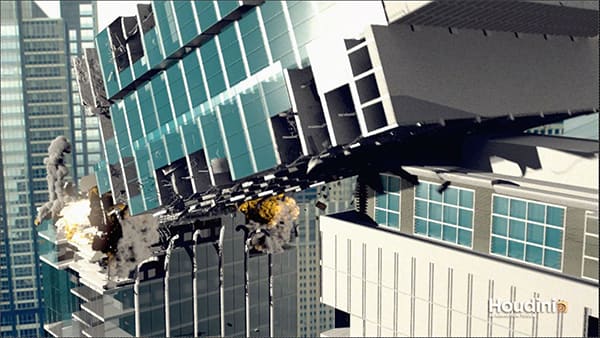
Autodesk Maya, Side FX Houdini and The Foundry Nuke will be used in this course to complete photoreal lighting for the visual effects destruction scene which was started in the HOU213 course. You will have access to highly detailed assets which have been made by fxphd which will allow you to render out lighting passes for a detailed Nuke composite. This course will cover some finishing touches to the FX work as well as an in depth look at the lighting process for feature film VFX.
Creating Dynamic Destruction FX in Houdini, Maya, & Nuke
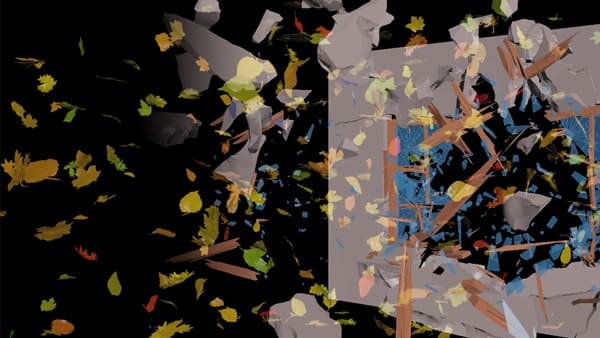
Maya, Houdini and Nuke will be used in this course to demonstrate the simulation of rigid body debris, particle fx and fluid effects. In this course we will learn how to simulate all the hero elements of a large scale destruction shot including, smashing glass, falling paper, tumbling furniture, dust explosions using fluids, dust trails off concrete debris using fluids and how to bake and compile all the simulations together in Nuke. This course will be focusing on the FX Simulation and not on the photorealistic lighting in Renderman or Arnold or the compositing of additional live action elements over the 3D renders.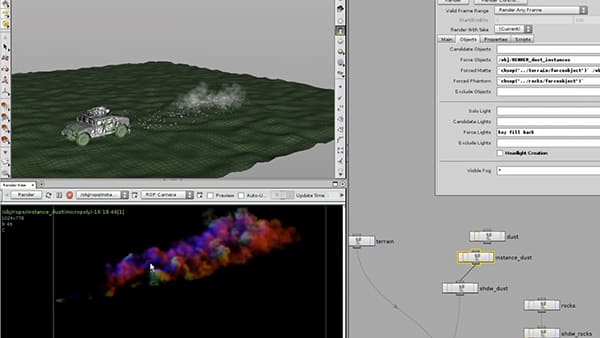
Mastering Lighting and Rendering with Houdini's Mantra
One of the best ways to step your FX abilities up to the next level is to master Mantra, Houdini’s rendering engine and one of the best rendering solutions in the industry. Familiarity with Mantra will allow you to render the toughest effects a film can throw at the Houdini artist, as well as speak the language of lighting, and seamlessly integrate your effects and shots with final compositing.
Houdini FX TD Fundamentals
Many VFX tutorials and courses teach a specific topic.."How to create a waterfall", for instance. While these are helpful, there is also a need for courses that teach fundamental principles. Instead of learning a 'trick', the course member gains a skill to craft their own solutions. This is especially true for TD's even more, likely spending 70% or 80% of their time solving problems instead of mimicking the steps of a "how to" tutorial.
Introduction to Houdini 12, Part 2
This course, taught by John Moncrief, is a continuation of HOU102 where we explore the fundamental concepts of Houdini focusing on the new workflow of version 12. In HOU102 we introduced many of the ideas for the course and here we will not only cover new material (CHOPS, UV’s, Image Based Lighting… ), but also expand on some of the ideas we covered in HOU102 including FLIP Fluids, VOPs, Pyro and Rigid Body Dynamics.
Introduction to Houdini 12, Part 1
If you’re a CG artist who has always been curious about Houdini, or if you are just wanting to brush up on your core skills and learn new techniques for working in Houdini 12, this is the course for you. Taught by John Moncrief, this course we will cover the fundamentals of working with Houdini. You will first learn the basic concepts and work-flow of Houdini, then work through the different contexts of the software in more detail by creating specific effects and solving real world production problems.
Water Effects in Houdini 11
Become familiar with Dynamics Operators to produce fluid effects using SPH, Voxel-Based and FLIP fluids in Houdini. Explore collision detection of FLIP fluids with Houdini's Rigid Body Dynamics and DOPs forces for wind, foam and spray. Members will use their new found skills to composite a photo real CG fountain into a live action background plate.